Top 10 Proximity Sensors in China for Global Buyers?
In recent years, the demand for Proximity Sensors has seen significant growth. These sensors play a crucial role in various industries, including automotive, consumer electronics, and industrial automation. They detect the presence of nearby objects without physical contact, enhancing safety and efficiency.
China stands out as a leading manufacturer of Proximity Sensors, providing businesses with a diverse range of options. The balance between quality and cost-effectiveness makes Chinese products appealing to global buyers. However, navigating this vast market can be overwhelming.
This article explores the top 10 Proximity Sensors in China. Each option will be analyzed, offering insights into specifications, applications, and manufacturers. This guide aims to assist buyers in making informed choices while considering the nuances of the market. Making the right decision can impact overall performance in numerous applications.
Top Features of Proximity Sensors Preferred by Global Buyers
Proximity sensors play a vital role in modern automation. Global buyers increasingly favor sensors that provide high accuracy and reliability. According to recent industry reports, nearly 80% of buyers prioritize sensors that offer robust performance in diverse environments. These sensors must withstand varying temperatures and humidity levels. This adaptability is crucial for industries like manufacturing and automotive.
The latest trends indicate a shift toward sensors with enhanced connectivity features. Buyers seek sensors that can easily integrate with IoT systems. Reports suggest that this connectivity can improve operational efficiency by up to 30%. However, some manufacturers struggle to keep up with these demands. Not all sensors can achieve the seamless integration that global buyers require.
Cost-effectiveness is another critical aspect that buyers consider. Data shows that over 50% of purchasers evaluate sensors based on long-term value and maintenance costs. Yet, many buyers may overlook the importance of after-sales support. Therefore, a lack of strong customer service can deter potential buyers. These reflections highlight a need for manufacturers to innovate and address buyer concerns effectively.
Market Trends: Proximity Sensor Demand Growth in China
Proximity sensors play a crucial role in various industries, and their demand in China is witnessing notable growth. With the rise of automation and smart technologies, these sensors are increasingly integrated into manufacturing, automotive, and consumer electronics. The surge in the Internet of Things (IoT) applications also drives this market expansion. Companies are now looking for reliable sensors that can enhance efficiency and reduce operational costs.
The increase in smart devices has sparked a trend toward more advanced proximity sensing technologies. Emerging solutions like capacitive and ultrasonic sensors offer high accuracy and versatility. However, buyers face challenges in keeping up with technological advancements. Some manufacturers may struggle to meet international quality standards, leading to inconsistencies. This area requires careful evaluation when selecting suppliers.
Market analysts predict that the demand for proximity sensors will continue to climb. As production scales up, buyers need to stay informed about innovations. This ensures they choose the best options for their specific needs. Understanding the landscape is vital for making informed decisions in a rapidly evolving market.
Key Manufacturers Leading the Proximity Sensor Market in China
The proximity sensor market in China has seen significant growth recently. Various manufacturers are leading this dynamic industry. They provide innovative solutions for applications across diverse sectors. These manufacturers focus on enhancing sensor accuracy and reliability. Their products are essential in automation, consumer electronics, and automotive sectors.
Several key players invest heavily in research and development. The aim is to produce advanced sensors that meet global standards. They utilize cutting-edge technology to improve performance. However, there are challenges. Some sensor designs can be overly complex, leading to potential integration issues. Balancing innovation and usability is crucial for these manufacturers.
Quality assurance remains a significant focus area in this industry. Reliable proximity sensors reduce errors in systems that depend on them. Manufacturers must maintain high production standards while keeping costs competitive. The industry's competitive landscape drives continuous improvement. Amid the progress, it is vital to address sustainability in manufacturing processes and materials. This proactive approach will benefit the market and environment in the long run.
Top 10 Proximity Sensors in China for Global Buyers
Innovative Technologies in Proximity Sensors: An Overview
Proximity sensors are essential in various applications, ranging from manufacturing to consumer electronics. Innovative technologies in this field are rapidly evolving. As of 2023, the global proximity sensor market is projected to reach approximately $2.73 billion by 2026, reflecting a compound annual growth rate (CAGR) of around 8.9%. Such growth highlights the increasing demand for automation and smart technology.
One notable trend is the rise of capacitive sensors, which can detect objects without direct contact. These sensors utilize changes in capacitance to determine proximity. According to industry reports, capacitive proximity sensors represent about 35% of the market share. However, reliance on specific materials and environmental conditions can limit their effectiveness. This raises questions about the need for further innovation in sensor materials and designs to enhance performance under diverse conditions.
Another advancing technology is the use of ultrasonic sensors. These sensors emit sound waves to detect nearby objects. They offer advantages in terms of distance measurement and non-contact operation. However, their sensitivity to environmental factors such as temperature and humidity poses challenges. Developers must address these limitations to fully leverage the potential of ultrasonic technology in the proximity sensor market.
Applications of Proximity Sensors Across Various Industries in China
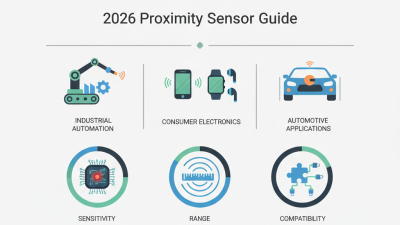
Proximity sensors play a vital role in numerous industries across China. These sensors are commonly used in manufacturing, automotive, and smart home applications. Their ability to detect objects without physical contact offers significant advantages, such as enhanced safety and efficiency. In manufacturing, they help automate processes, ensuring swift production lines and reduced human error.
In the automotive sector, proximity sensors contribute to advanced driver assistance systems (ADAS). These sensors enable features like parking assistance and collision avoidance. As vehicles become smarter, the demand for reliable sensors grows. This shift indicates their significance in enhancing vehicle safety.
Tips: When selecting a proximity sensor, consider the environmental conditions. Factors like temperature, humidity, and dust can affect performance. Ensure that you assess the specific application requirements. Another consideration is the sensor type. Inductive, capacitive, and ultrasonic sensors serve different functions. Each type has its strengths and weaknesses.
The integration of proximity sensors into smart homes is another growing trend. They enhance security by detecting movement and activating alarms. However, users should also be mindful of privacy concerns. A careful balance of convenience and security is essential.