Top Proximity Sensor Types for Global Buyers to Consider?
Proximity sensors play a critical role in various industries, enabling automatic detection of objects without physical contact. As Michael Trent, an industry expert, stated, "The right proximity sensor can boost efficiency significantly." With the ongoing advancements in technology, understanding the different types of proximity sensors available is essential for businesses. These sensors can enhance operations, improve safety, and reduce costs.
There are several popular types of proximity sensors, including capacitive, inductive, and ultrasonic sensors. Each type offers unique benefits and can be applied in diverse scenarios. Choosing the appropriate proximity sensor requires a deep understanding of each sensor's characteristics, efficiency, and reliability. In a world where automation is key, having the right sensor can make a difference.
However, it is important to recognize that not all sensors are perfect. Some may not work well in specific environmental conditions. This reinforces the need for businesses to evaluate their requirements carefully. Proximity sensors are not just a technical choice; they are a critical component in connecting technology with practical applications.

Overview of Proximity Sensors and Their Applications
Proximity sensors play a crucial role in various applications across industries. They detect the presence of objects without physical contact, enhancing efficiency and safety in operations. In manufacturing, they are foundational for automation systems. According to a report by MarketsandMarkets, the global proximity sensor market is projected to grow from $2.68 billion in 2021 to $4.07 billion by 2026, reflecting a significant increase in demand.
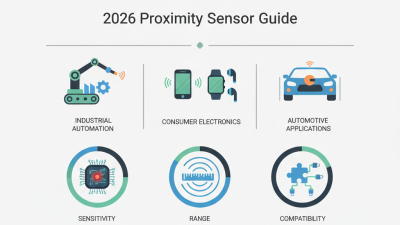
These sensors find applications in automotive systems as well. They support functions like parking assistance and collision detection. The automotive sector accounts for approximately 35% of the proximity sensor market share. This demonstrates the critical importance of reliable sensing technology. However, users must consider environmental factors such as temperature and humidity, which can affect sensor performance.
Challenges exist regarding sensor selection and installation. Not every sensor type fits every application. For instance, capacitive sensors excel in detecting non-metallic objects, while inductive sensors are suited for metallic components. Understanding these nuances is essential for optimal performance. It's vital for buyers to analyze specific requirements and limitations before making a purchase.
Types of Proximity Sensors: An In-Depth Analysis
Proximity sensors have become essential in various industries. These sensors detect nearby objects without direct contact, offering critical data for automation. Five main types stand out: capacitive, inductive, photoelectric, ultrasonic, and magnetic.
Capacitive sensors can detect both metallic and non-metallic materials. They function well in applications where traditional sensors might fail. According to recent industry reports, the global market for capacitive sensors is projected to grow by 15% per year. This growth reflects their increasing utility in industries like packaging and food processing.
Inductive sensors are particularly effective for detecting metal objects. They are used extensively in manufacturing and robotics. A study indicated that these sensors are favored for their durability and reliability. However, they do have limitations, such as a reduced sensing range compared to other types. Meanwhile, photoelectric sensors are versatile, working across various materials. Their adaptability makes them ideal for automated systems. Yet, they can be sensitive to environmental factors like dust or light interference.
Exploring these types helps buyers find the right sensor for their needs. Each type has its strengths and weaknesses, impacting operational efficiency. Making informed choices can lead to improved productivity and reduced errors in processes.
Key Factors to Consider When Choosing a Proximity Sensor
When selecting a proximity sensor, buyers need to consider several key factors. Detection range is crucial. Sensors typically vary from millimeters to several meters. Understanding the application is vital for precise selection. For instance, a short-range sensor may work well in tight spaces, while a long-range one is needed for larger areas. Industry reports indicate that up to 70% of sensor failures arise from incorrect range specifications.
Material compatibility is another consideration. Sensors must withstand environmental conditions. For example, exposure to moisture, dust, or chemicals can impact performance. Data shows that sensors designed with rugged casing and high IP ratings tend to have a longevity of 10-15 years, reducing replacement costs over time.
Additionally, communication interface options should not be overlooked. Various sensors offer different protocols like I2C, SPI, or UART. This choice affects integration into existing systems. Inconsistent communication can lead to erroneous readings or system failures. Evaluating these factors can ensure that buyers make informed decisions.
Top Brands and Manufacturers in the Proximity Sensor Market
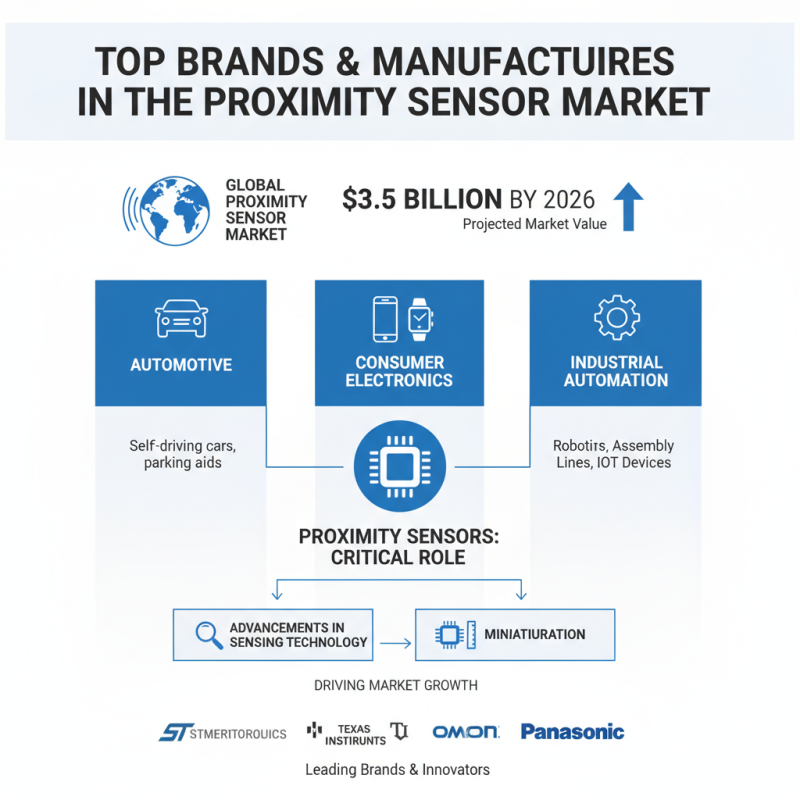
In the rapidly evolving world of technology, proximity sensors play a critical role in numerous applications. These sensors are essential in various sectors, such as automotive, consumer electronics, and industrial automation. The global proximity sensor market is projected to reach $3.5 billion by 2026, showcasing the growing demand for these devices. Notably, advancements in sensing technology and miniaturization are driving this surge.
Key manufacturers in the market are consistently innovating. They focus on improved accuracy, reduced power consumption, and enhanced durability. Many leading brands emphasize using advanced materials and smart algorithms. As a result, these sensors perform better in diverse environments, ensuring reliability. According to a recent industry report, over 50% of proximity sensor sales are attributed to inductive and capacitive types, emphasizing their popularity.
However, challenges exist in this competitive landscape. The complexity of integrating sensors into systems can lead to design hurdles. Additionally, the distinction between sensor types can confuse buyers. Understanding the specific needs is crucial for effective solutions. Gaining insights from market trends and seeking expert advice is vital for making informed decisions. These proactive measures can help mitigate risks and improve outcomes in proximity sensor selection.
Future Trends and Innovations in Proximity Sensor Technology
Proximity sensors are evolving rapidly, driven by advancements in technology and changing market demands. The global proximity sensor market is expected to reach $2.5 billion by 2027, growing at a CAGR of 8.2% according to industry reports. This growth results from increasing automation and the rise of smart technologies across various sectors. The industrial automation segment dominates the market, but consumer electronics are becoming increasingly significant.
Innovations such as capacitive and inductive proximity sensors are leading the charge. Capacitance sensors can detect non-metallic objects, broadening their applications. Meanwhile, inductive sensors continue to excel in detecting metal targets. Emerging technologies like miniaturization and IoT integration are shaping the future landscape. Research indicates that 60% of manufacturers plan to upgrade their sensor technologies to remain competitive.
Yet, challenges persist. These include sensor interference and calibration issues. Users need to be skeptical of sensor accuracy in different environments. As companies invest in new technologies, some may overlook the importance of thorough testing. Balancing innovation with reliability will be crucial as the industry continues to evolve.
Top Proximity Sensor Types for Global Buyers to Consider
| Sensor Type |
Operating Principle |
Application Areas |
Key Features |
Future Trends |
| Capacitive Sensor |
Measures changes in capacitance |
Consumer electronics, industrial automation |
High sensitivity, supports sensing of non-metallic objects |
Integration with IoT devices, miniaturization |
| Inductive Sensor |
Uses electromagnetic fields to detect metal |
Automotive, manufacturing |
Durable, non-contact sensing |
Increased precision, smart factory applications |
| Ultrasonic Sensor |
Emits ultrasonic waves and measures time of flight |
Robotics, parking assistance |
Effective in various environments, long-range detection |
Improved algorithms for better accuracy |
| Photoelectric Sensor |
Uses light to detect presence or absence of objects |
Conveyor systems, packaging |
High speed, remote sensing capability |
Higher sensitivity and adaptive features |
| Magnetic Sensor |
Detects magnetic fields from magnets or current |
Smartphones, home automation |
Compact design, low power consumption |
Smart home integration, enhanced accuracy |