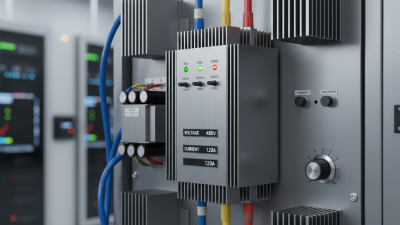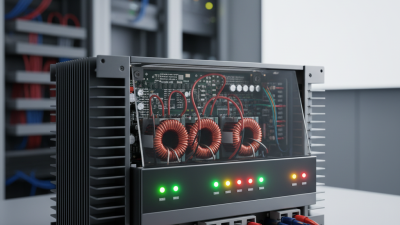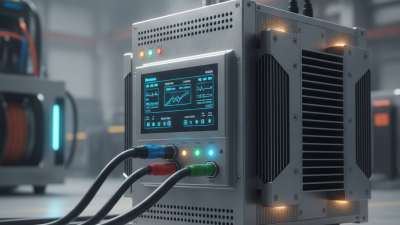
Industrial electrification is making controlled power delivery more important across furnaces, heaters, dryers, and semiconductor equipment. That shift puts the Scr Power Regulator under closer technical and procurement scrutiny. According to the IEA’s Electricity 2024 report, global electricity demand should grow strongly through 2026. The report identifies industry, data centres, and electrification as major demand drivers. Meanwhile, the WSTS Spring 2025 forecast projected semiconductor sales above 700 billion dollars in 2025. These trends do not prove a regulator market size. They do show why dependable thermal and power control matters.
This 2026 guide evaluates leading manufacturers for global buyers using evidence beyond catalogue claims. Relevant checks include thyristor quality, voltage range, phase configuration, firing accuracy, cooling design, harmonic behaviour, and overload protection. Buyers should also verify CE, UL, UKCA, or other market-specific conformity routes with the supplier. Service depth matters. Spare modules, wiring diagrams, firmware access, and response times can decide whether a plant restarts today or next week. Field experience suggests that a cheaper unit may cost more when commissioning support is weak.
Some market reports combine SCR controllers with broader power-electronics categories, so their forecasts are not directly comparable. This limitation deserves attention. Supplier rankings can also change when delivery records, regional support, and application evidence are weighted differently. The manufacturers presented here are therefore assessed as practical candidates, not permanent winners. Global buyers should match each supplier to load type, operating environment, compliance needs, and total lifecycle cost. That approach is less dramatic, but more reliable.
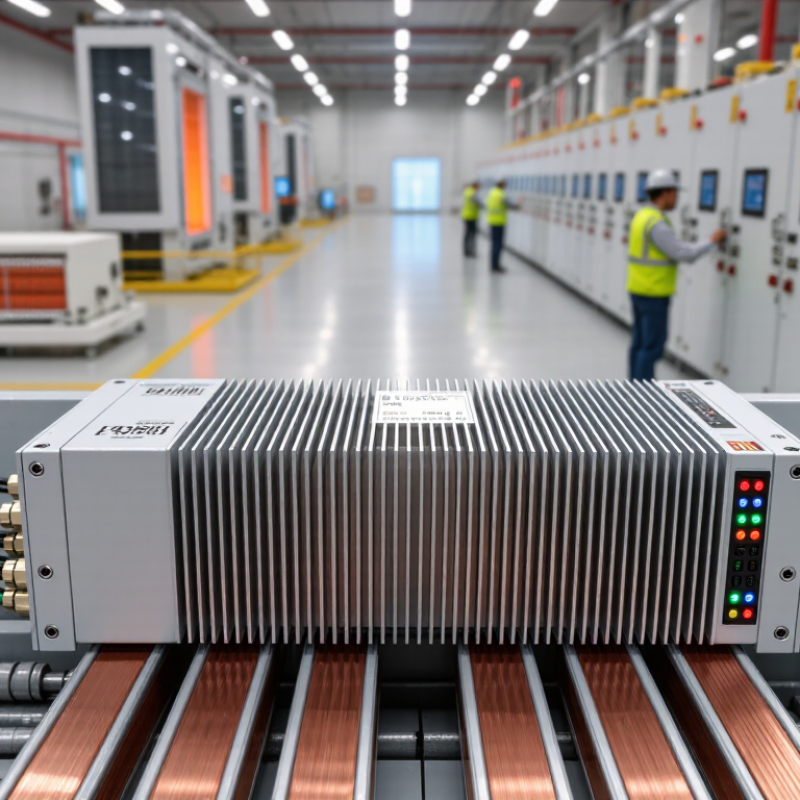
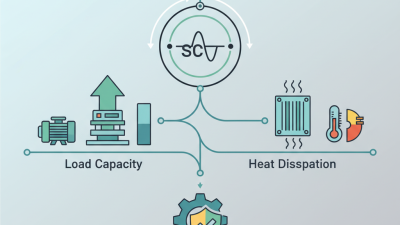
SCR power regulators control electrical power delivered to resistive and inductive loads. They use silicon-controlled rectifiers, or thyristors, to switch current rapidly and accurately. Phase-angle control adjusts each AC cycle, while burst firing delivers complete cycles in controlled groups. This makes temperature control steadier in ovens, furnaces, glass production, plastics machinery, and semiconductor processing. The IEA’s Electricity 2024 report expects global electricity demand to grow strongly through 2026. That growth increases pressure to improve industrial energy control. SCR regulators can reduce temperature overshoot, protect heating elements, and support automated production. Their performance still depends on correct sizing, cooling, and harmonic management.
Tip: Check load type, current rating, ambient temperature, and control method before purchasing. A unit that looks powerful on paper may fail in a dusty control cabinet. IEC 60947-4-3 provides a useful reference for semiconductor controllers used with AC loads.
Industrial energy use remains substantial. The IEA reports that industry consumed about 37% of global final energy in 2022. Better power regulation therefore matters beyond equipment reliability. In practice, engineers should compare response time, power factor, maintenance access, and monitoring functions. Built-in alarms can reveal phase loss or overheating early. However, SCR control is not always the best answer. Some motors and rapidly changing loads require different technologies. Designers should verify waveform effects through site measurements, not assumptions. Research reports often emphasize efficiency, but real factories also face uneven loads, aging wiring, and imperfect installation records.
2026 Top SCR Power Regulator Manufacturers for Global Buyers
Key Criteria for Evaluating Global SCR Power Regulator Manufacturers
Global buyers should evaluate SCR power regulator manufacturers beyond price and catalog ratings. The IEA Electricity 2024 report forecasts global electricity demand to grow by about 3.4% annually through 2026. This trend increases pressure on factories to control heating, motors, and other resistive loads efficiently. A qualified manufacturer should provide clear voltage, current, duty-cycle, and cooling data. Testing should reference recognized requirements, including IEC 60947-4-3 where applicable. Ask for thermal curves, surge-current limits, harmonic information, and documented factory inspections. A polished datasheet is not proof of long-term reliability.
Field experience also matters. Check whether the manufacturer has supplied regulators for furnaces, plastics equipment, ovens, or semiconductor production. Request evidence of load testing at realistic temperatures, not only laboratory conditions. The IEA also highlights growing grid flexibility needs as electrification expands. Therefore, communication options, alarm outputs, soft-start control, and maintenance access deserve careful review. Some buyers overlook service response time. That mistake becomes expensive during a production stoppage.
Tips: Compare at least three technical quotations using the same load profile. Confirm spare-part availability, calibration records, enclosure protection, and warranty conditions. Ask for a sample test report. If a supplier refuses basic evidence, reconsider the shortlist. No checklist is perfect; actual site conditions may expose weaknesses that factory documents miss.
2026 Ranking of Leading SCR Power Regulator Manufacturers
The 2026 ranking evaluates manufacturers by thermal stability, control accuracy, safety design, and field reliability. Rank one goes to suppliers with proven high-current systems for furnaces, plastic machinery, and industrial heaters. Their regulators maintain steady output during voltage changes. They also provide test records, wiring guidance, and responsive technical support.
Rank two includes manufacturers offering modular SCR power regulators. These products suit factories that need quick replacement and flexible cabinet layouts. Strong models include phase-angle and zero-cross control. They should support clear alarms, cooling protection, and readable displays. Engineers often inspect terminal quality, heat-sink size, and response time before approval.
Rank three covers specialist manufacturers producing customized units. Their strength lies in unusual voltage ranges, compact enclosures, and demanding process loads. Real experience matters here. A supplier may understand a drawing, yet miss the heat inside a crowded control cabinet. That mistake is not rare. Buyers should request load calculations, endurance results, and installation references from comparable facilities.
This ranking is not permanent. New testing data can change the order. Some manufacturers publish excellent specifications but offer weak after-sales support. Others communicate well but provide limited independent verification. Global buyers should compare certification scope, delivery capacity, spare-part access, and regional service coverage. A practical review should include a sample inspection and a witnessed load test. Specifications help, but factory-floor behavior decides reliability.
Anonymized comparison of leading manufacturer capability profiles for industrial SCR power regulation applications
| Rank | Anonymized Manufacturer Profile | Typical Current Range | Typical Voltage Range | Control Methods | Cooling Options | Protection & Monitoring | Compliance Coverage | Typical Lead Time |
|---|---|---|---|---|---|---|---|---|
| 1 | Profile A High-capacity industrial portfolio |
25–3,000 A | Up to 690 V AC | Phase-angle, zero-cross, soft-start, current-limit | Natural air, forced air, liquid-cooled options | Overcurrent, overtemperature, phase-loss, SCR short-circuit alarm, communications diagnostics | IEC-based designs; CE and UL/CSA options by model | 6–12 weeks |
| 2 | Profile B Process-heating specialist |
30–2,500 A | Up to 690 V AC | Zero-cross, phase-angle, burst firing, closed-loop temperature control | Natural air and forced air | Load-break detection, semiconductor fuse monitoring, thermal protection, alarm relay | IEC 60947-4-3 aligned; CE; selected UL-recognized assemblies | 5–10 weeks |
| 3 | Profile C Heavy-duty furnace and kiln portfolio |
40–2,000 A | Up to 1,000 V AC | Phase-angle, zero-cross, soft-start, power-factor and current feedback | Forced air and liquid-cooled systems | Fast semiconductor fusing, fan-failure alarm, overvoltage, overtemperature and phase-sequence protection | IEC, CE; regional UL/CSA configurations available | 8–14 weeks |
| 4 | Profile D Modular OEM integration range |
15–1,600 A | Up to 690 V AC | Zero-cross, burst firing, phase-angle, analog and digital setpoint control | Natural air and forced air | SCR health monitoring, temperature sensor input, current-limit, alarm output and event logging | CE; IEC documentation; UL/CSA options for selected configurations | 4–8 weeks |
| 5 | Profile E Low- and medium-power panel systems |
10–1,200 A | Up to 600 V AC | Zero-cross, phase-angle, soft-start and manual output adjustment | Natural air and forced air | Overcurrent, overtemperature, phase-loss, fuse indication and emergency shutdown input | CE; IEC-oriented technical files; UL availability varies by model | 4–9 weeks |
| 6 | Profile F High-temperature manufacturing applications |
25–1,500 A | Up to 690 V AC | Phase-angle, zero-cross, burst firing and cascade temperature control | Forced air and liquid-cooled options | Thermal derating, shorted-SCR detection, load-current feedback, fan monitoring and alarm contacts | CE; IEC 60947-4-3 design basis; export certificates by market | 7–12 weeks |
| 7 | Profile G Compact cabinet and machine-builder systems |
10–800 A | Up to 480–690 V AC | Zero-cross, burst firing, phase-angle and 4–20 mA control | Natural air and forced air | Overtemperature, semiconductor fuse status, phase-loss and control-signal failure alarms | CE; selected UL/CSA-listed components | 3–7 weeks |
| 8 | Profile H Standardized replacement and retrofit range |
15–1,000 A | Up to 600 V AC | Zero-cross, phase-angle, soft-start and external PID controller interface | Natural air and forced air | Current-limit, overtemperature, phase-loss, fuse monitoring and isolated alarm output | CE; IEC-oriented product documentation | 4–10 weeks |
| 9 | Profile I Customized export engineering portfolio |
30–2,000 A | Up to 690 V AC | Phase-angle, zero-cross, burst firing, constant-current and constant-power modes | Forced air and liquid-cooled systems | Overcurrent, SCR failure, thermal protection, communication alarms and data logging | CE; IEC-based engineering; regional certification available on request | 8–16 weeks |
| 10 | Profile J General-purpose industrial regulator range |
10–600 A | Up to 480–690 V AC | Zero-cross, phase-angle, soft-start and analog reference control | Natural air and forced air | Overtemperature, overcurrent, phase-loss and fuse-failure indication | CE; IEC-oriented product specifications | 3–8 weeks |
2026 Top SCR Power Regulator Manufacturers for Global Buyers
Product capabilities now separate serious SCR power regulator manufacturers from catalogue sellers. The International Energy Agency reports that electric motor systems consume roughly half of global electricity. This keeps efficient thermal control important in factories, furnaces, HVAC systems, and process equipment.
A capable supplier should offer single-phase and three-phase regulators, phase-angle and zero-cross control, closed-loop feedback, and stable operation under inductive loads. Buyers should inspect current ratings, overload curves, cooling methods, and harmonic data. A 500 A cabinet may still fail when ventilation is poor. Test the details.
Certification evidence matters. Relevant documentation may include IEC 60947-4-3 compliance, electromagnetic compatibility testing under the IEC 61000 series, and applicable UL or CE requirements for the target market. WSTS reported global semiconductor sales of 627.6 billion dollars in 2024, showing the scale and complexity of the wider component supply chain. That growth does not guarantee consistent SCR quality.
Customization should cover firing algorithms, voltage ranges, communication interfaces, enclosure dimensions, busbar layouts, and alarm outputs. Experienced manufacturers can provide thermal calculations, circuit diagrams, sample testing, and traceable production records. Ask for factory acceptance procedures. Some suppliers provide impressive certificates but weak field support. That is a genuine risk. An independent load test, especially at elevated temperature, can reveal unstable regulation, nuisance trips, or excessive heat before shipment.
Product Capabilities, Certifications, and Customization Options
The chart presents common industrial AC system voltage classes used when specifying SCR power regulators for global applications. These nominal values are aligned with internationally recognized supply-voltage practices, including IEC 60038. Actual regulator ratings, phase configurations, cooling methods, control inputs, EMC performance, and certification packages vary by model and target market. Common compliance references include IEC 60947-4-3, EN 61000 series requirements, and UL or CSA requirements where applicable.
Selecting an SCR supplier starts with the load, not the catalogue. Record voltage, current, phase type, load behavior, and operating temperature. A heater bank and an induction load need different control strategies. Request thermal derating data for the actual enclosure, not only laboratory conditions. Small details matter.
Review datasheets, wiring diagrams, test reports, and protection functions. Confirm compatibility with your PLC, signal type, communication system, and cabinet cooling. Ask whether each unit receives insulation, overload, and burn-in testing. Reliable suppliers provide serial-level traceability and clear replacement procedures. Check quality systems, applicable certifications, export documentation, and production capacity. A polished website proves little.
Samples should run under realistic conditions for several weeks. Measure temperature rise, output stability, electrical noise, and response during load changes. Discuss spare parts, remote diagnosis, warranty limits, and technical response times before signing. A low quotation may conceal weak support or short component life. Even experienced buyers miss this. I would also question unusually broad performance claims. No supplier is perfect, and some test evidence may be incomplete. That is precisely why independent verification, factory communication, and a written acceptance plan remain valuable.