Top 5 Aluminum Heatsinks for Optimal Cooling Solutions?
In today’s fast-paced technology sector, effective heat dissipation is crucial for enhancing performance and longevity. Aluminum heatsinks have emerged as a preferred solution due to their lightweight and efficient thermal conductivity. Industry expert John McCarthy, a senior engineer at Thermal Solutions Inc., asserts, "The right aluminum heatsink can make or break your device's performance." Recent reports indicate that the global aluminum heatsinks market is expected to grow by 7.2% annually from 2021 to 2028, highlighting the increasing demand for optimized cooling solutions.
Moreover, improper heat management can lead to overheating, which may reduce efficiency. Traditional cooling methods often fall short, leading to performance drops. A well-chosen aluminum heatsink provides a sustainable alternative, ensuring that devices stay within optimal temperature ranges. Reports indicate that devices using quality aluminum heatsinks can see performance gains of up to 20%. Yet, not all heatsinks are created equal; choosing the right design and material is essential.
While the benefits of aluminum heatsinks are clear, there are still uncertainties in selection criteria. Buyers often face challenges in navigating product specifications and compatibility. This emphasizes the need for better education and understanding in the industry. Evaluating various options is key to achieving the best cooling outcomes and sustaining technological advancement.

Overview of Aluminum Heatsinks and Their Importance in Cooling
Aluminum heatsinks play a crucial role in managing heat in various electronic devices. These components are designed to dissipate heat effectively, ensuring optimal performance. When heat builds up, it can lead to device failure. Therefore, selecting the right heatsink is essential for any thermal management system.
Interestingly, not all aluminum heatsinks are created equal. Variations in design, surface area, and material quality can significantly affect cooling performance. A heatsink that appears robust may not always deliver. It’s imperative to evaluate factors like thermal conductivity and airflow. Heatsinks need to fit seamlessly into your device's design to maximize cooling.
Despite their effectiveness, some users may overlook the importance of regular maintenance. Dust accumulation can impede airflow and reduce efficiency. Routine cleaning is often neglected but is vital. Understanding the specific needs of your device and the environment it's in can help in choosing the most suitable heatsink. Engaging in conversations with experts in thermal management can also shed light on making informed decisions.
Top 5 Aluminum Heatsinks for Optimal Cooling Solutions
Key Factors to Consider When Selecting Aluminum Heatsinks
When selecting aluminum heatsinks, several key factors demand attention.
Thermal conductivity is paramount.
Aluminum's thermal conductivity ranges from 150 to 250 W/m·K.
This range determines how efficiently heat dissipates. Heatsinks with higher thermal conductivity transfer heat more effectively.
Industrial reports suggest that enhancing thermal efficiency by just 10% can improve overall device performance.
Surface area is another crucial detail. A larger surface area allows for better heat dissipation.
Fins and intricate designs can increase surface area. However, a complex design might lead to manufacturing challenges.
Some industry experts raise concerns about balancing design complexity and thermal efficacy.
Material thickness also plays a role; thicker fins can enhance durability but may lead to bulkier designs.
Weight is often overlooked but has implications for application usability. An over heavy heatsink can complicate installation.
Users must consider the environment in which the heatsink will operate. Factors like airflow and ambient temperature matter significantly.
While some studies show that optimal airflow can boost cooling by up to 40%,
improper airflow can negate these benefits. Understanding these factors ensures better performance and reliability in various applications.
Top 5 Aluminum Heatsinks for Various Applications and Needs
When selecting aluminum heatsinks, understanding your specific needs is crucial. Different applications require unique cooling solutions. For example, electronic devices might benefit from compact heatsinks, while high-performance machinery may need larger, more efficient designs.
Size, shape, and thermal conductivity are important factors. The right design can significantly improve performance. However, not all options are perfect. Some heatsinks may struggle with heat dissipation under heavy loads. This could lead to overheating issues, affecting device longevity. Researching and comparing different models helps ensure effective cooling.
In projects where space is limited, low-profile heatsinks are ideal. They fit snugly into tight enclosures, but may not dissipate heat as effectively as bulkier models. In more extensive applications, larger heatsinks can be more effective, albeit at the cost of taking up more space. Each choice presents its own challenges, and careful consideration is necessary to achieve optimal cooling.
Comparison of Performance Metrics for Leading Aluminum Heatsinks
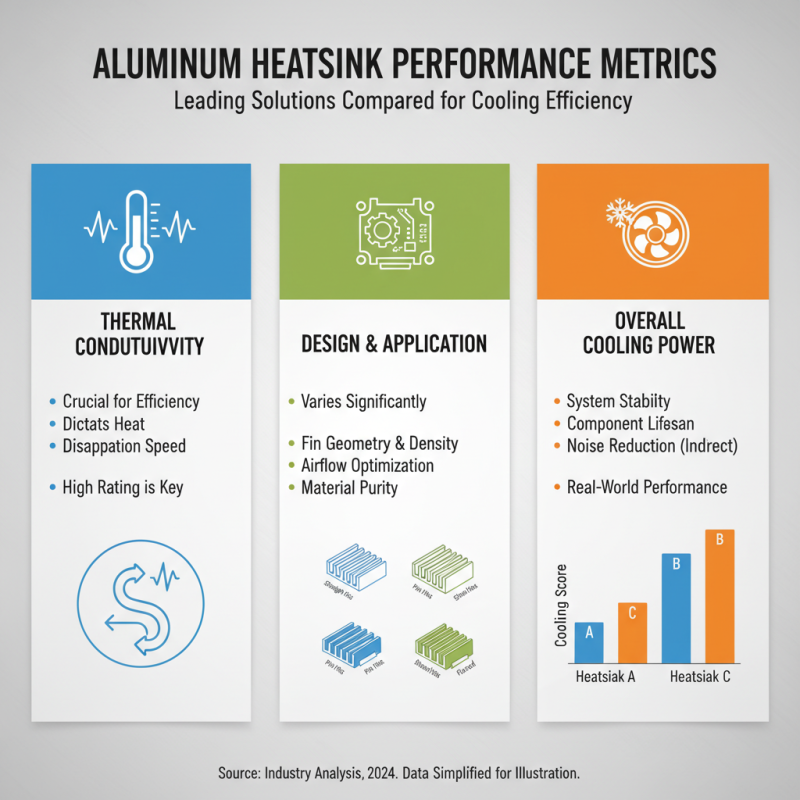
When selecting aluminum heatsinks for cooling solutions, various performance metrics come into play. The thermal conductivity of aluminum plays a crucial role in efficiency. It dictates how quickly heat dissipates, impacting overall cooling performance. Many aluminum heatsinks boast a high thermal conductivity rating. However, the actual performance can vary significantly based on design and application.
Airflow is another vital factor. Effective heatsinks enhance airflow, facilitating better heat transfer. Designs with fins or grooves maximize surface area, aiding in quicker heat dissipation. Yet, if the fan or ambient conditions aren’t optimal, even the best heatsinks may struggle. It’s essential to match the heatsink design to the cooling requirements of specific systems.
Moreover, weight and size matter. A larger heatsink may offer better cooling, but it can add unnecessary bulk. In tight spaces, a compact heatsink might be necessary, even if it sacrifices some efficiency. Evaluating the trade-offs in size, efficiency, and weight is crucial for an optimal cooling solution. Ultimately, users must reflect on their specific needs to make the best decision.
Installation and Maintenance Tips for Optimal Heatsink Performance
When it comes to heatsink performance, proper installation is crucial. Ensure the heatsink makes direct contact with the CPU or component. Too much thermal paste can trap air. A thin, even layer is all you need. Remember, the goal is efficient heat transfer.
Maintaining your heatsink is equally important. Dust can accumulate over time, hindering airflow. Regularly clean the fins and fans with compressed air. Check that all screws are tight. Loose components can lead to increased vibrations and noise.
Sometimes, users overlook the surrounding environment. Ensure that your cooling solution is not obstructed by other components. Good airflow in the case can enhance heatsink effectiveness. Feel free to reassess your setup periodically. If temperatures rise unexpectedly, it may indicate an installation flaw.
Top 5 Aluminum Heatsinks for Optimal Cooling Solutions
| Heatsink Model |
Material |
Dimensions (mm) |
Weight (g) |
Thermal Conductivity (W/m·K) |
Cooling Capacity (W) |
| Model A |
Aluminum 6063 |
120 x 80 x 20 |
150 |
205 |
75 |
| Model B |
Aluminum 6061 |
100 x 50 x 15 |
100 |
210 |
60 |
| Model C |
Aluminum 5052 |
150 x 100 x 25 |
200 |
198 |
85 |
| Model D |
Aluminum 7005 |
130 x 60 x 18 |
130 |
200 |
70 |
| Model E |
Aluminum 2024 |
110 x 75 x 22 |
120 |
215 |
80 |