How to Choose the Right Cooling Heat Sink for Your Project?
Choosing the right cooling heat sink for a project can be challenging. According to thermal management expert Dr. Emily Turner, “Selecting the correct cooling heat sink is vital for optimal performance.” This task requires a clear understanding of thermal dynamics and the specific needs of the application.
Several factors influence the choice of a cooling heat sink. These include the heat generated by components, the available space, and airflow considerations. Each project may have unique requirements. An unsuitable heat sink can lead to overheating and reduced reliability. Pay attention to these details when making your selection.
Additionally, not every material or design suits all projects. Aluminum and copper have different thermal conductivities and weights. Misjudging these aspects can result in inefficiencies. It’s important to reflect on the specific needs of your project. This will guide you in choosing a cooling heat sink that enhances overall performance while ensuring longevity.
Understanding the Role of Heat Sinks in Electronics Cooling
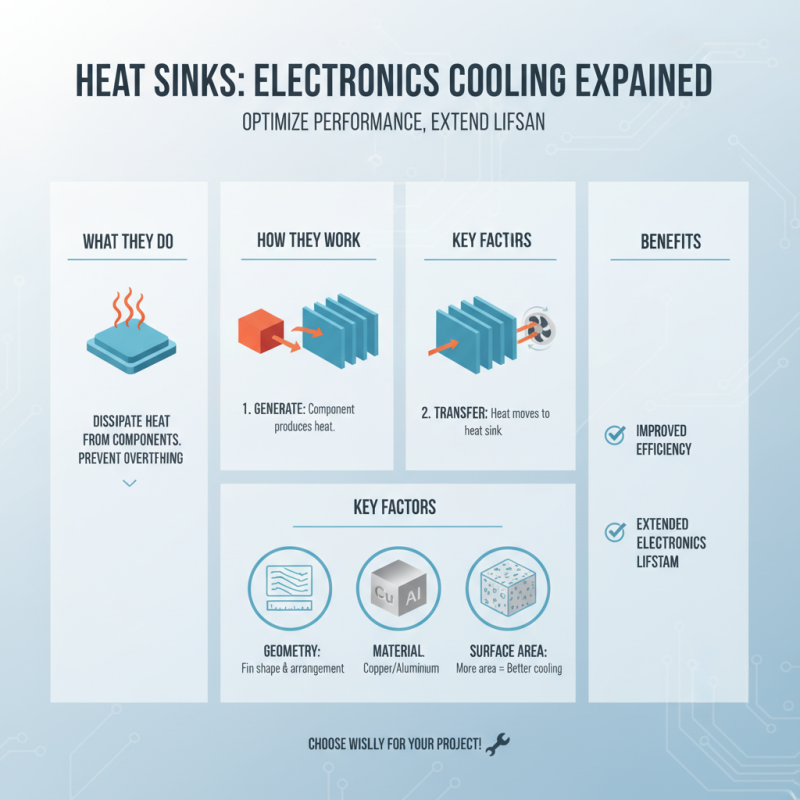
Heat sinks play a crucial role in cooling electronic devices. They dissipate heat generated by components, preventing overheating. Understanding how they work helps in selecting the right one for your project. A well-designed heat sink improves efficiency and extends the lifespan of electronics. The geometry, material, and surface area can greatly influence performance.
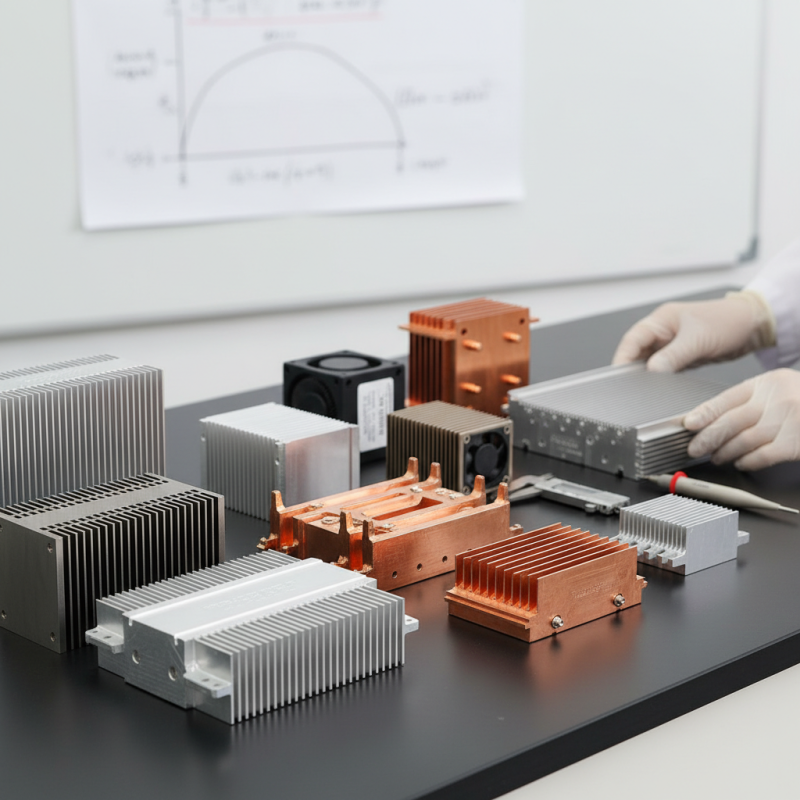
When choosing a heat sink, consider factors like size and weight. Too large a heat sink may be impractical for compact devices. Conversely, a small sink might not dissipate enough heat. Also, the material makes a difference. Aluminum is lighter and cost-effective, while copper provides better heat conductivity. Each choice has trade-offs that must be carefully evaluated.
Installing a heat sink requires attention to detail. Proper thermal interface materials are essential for effective heat transfer. An imperfect application can lead to hot spots and inefficiency. Experimenting with placements can yield better results. Analyzing performance post-installation is vital for any project. In the world of electronics, a slight oversight can lead to significant thermal issues.
Identifying the Thermal Requirements of Your Project
Identifying the thermal requirements of your project is crucial. Heat generation varies widely depending on the components you use. For instance, high-performance CPUs and GPUs can produce significant heat. Understanding this is your first step.
Consider the power consumed by your components. Calculate the expected thermal output. Use tools like simulation software to model the heat flow in your design. This can help in determining the right cooling solution. Visualize how the heat sink will fit into your design. It's not just about size; airflow is equally important.
Real-world testing is essential. Many designs look perfect on paper but fail under actual conditions. Monitor temperatures during trials. Adjust your heat sink choice based on these observations. Sometimes, a larger or differently shaped heat sink is required. Be open to iterating on your designs; it’s part of the engineering process.
How to Choose the Right Cooling Heat Sink for Your Project? - Identifying the Thermal Requirements of Your Project
| Heat Sink Type |
Material |
Thermal Conductivity (W/m·K) |
Weight (g) |
Dimensions (mm) |
Max Airflow (CFM) |
| Extruded Heat Sink |
Aluminum |
205 |
150 |
100 x 50 x 20 |
30 |
| Stamped Heat Sink |
Copper |
390 |
80 |
80 x 40 x 15 |
25 |
| Bonded Fin Heat Sink |
Aluminum |
205 |
200 |
120 x 60 x 25 |
35 |
| Active Cooling Sink |
Copper |
390 |
300 |
150 x 75 x 30 |
50 |
| Passive Cooling Sink |
Aluminum |
205 |
100 |
90 x 45 x 15 |
- |
Evaluating Different Types of Heat Sink Materials
When selecting a heat sink, material choice plays a crucial role in thermal performance. Common materials include aluminum, copper, and composite options. Aluminum is lightweight and cost-effective, making it a popular choice for many applications. According to a report by the International Journal of Thermal Sciences, aluminum heat sinks can achieve thermal conductivity levels of approximately 205 W/m·K. This efficiency is often sufficient for low to moderate power electronics.
Copper, on the other hand, exhibits superior thermal conductivity, reaching up to 400 W/m·K. This makes it ideal for high-performance applications where heat dissipation is critical. However, copper is heavier and more expensive than aluminum, which is a significant drawback for certain projects. Research from Electronics Cooling indicates that thermal resistance for a copper heat sink can be 20-30% lower than that of an aluminum counterpart, enhancing overall heat management.
Composite materials are starting to gain traction in the industry. They offer a unique balance of thermal conductivity and structural integrity. A study by Advanced Materials shows that these composites can provide around 80% of copper’s conductivity while reducing weight by nearly half. It's essential to carefully weigh these factors, as a mismatch in heat sink material can lead to overheating and reduced component lifespan. Thus, detailed analysis of the project's heat dissipation needs should guide material selection.
Assessing Size and Form Factor for Optimal Performance
When selecting a cooling heat sink for your project, assessing size and form factor is critical. The heat sink must fit the designated space without obstructing other components. Measure the area where it will be installed. Make sure there is sufficient clearance for air circulation and other electronic parts. A larger heat sink typically offers better cooling, but it may not always fit snugly in compact designs.
Consider the shape of your heat sink. Flat models can be efficient but may not perform well in all orientations. Tall or finned designs can enhance cooling through increased surface area. However, they might complicate the layout. Balancing efficiency with available space is essential. Visualize how the heat sink interacts with airflow and components.
It is okay to encounter challenges while selecting the ideal heat sink. You might initially overlook size constraints or airflow paths. Testing various configurations can lead to unexpected insights. Don't hesitate to adjust your design based on these findings. This iterative process often yields the best results in achieving optimal thermal performance.
Heat Sink Size and Form Factor Assessment
Considering Installation and Maintenance Factors for Heat Sinks
When choosing a cooling heat sink, installation and maintenance are critical factors.
Ease of installation ensures that the heat sink can be implemented efficiently. Complicated setups may lead to errors, impacting performance.
According to industry reports, improper installation can reduce heat dissipation by up to 30%. This highlights the importance of understanding your project's specific requirements before selecting a heat sink.
Maintenance considerations are equally vital. Dust and debris can accumulate, impacting heat sink efficiency.
Regular cleaning is necessary to maintain optimal performance. Reports suggest that heat sinks should be inspected every six months.
However, some projects may require more frequent checks.
Tip: Always use a thermal interface material to enhance heat transfer.
Accessibility should be considered. If a heat sink is positioned in a hard-to-reach area, maintenance becomes challenging.
Some setups may lack proper airflow, leading to overheating issues. This can often go unnoticed until critical failures occur.
Tip: Plan for future upgrades. Choose a heat sink that allows for easy replacement as technology evolves.