How to Choose the Best Thyristor Controller for Your Electrical Applications
Choosing the right Thyristor Controller is crucial for various electrical applications. It significantly impacts performance and efficiency. A Thyristor Controller plays a key role in managing power flow, offering precise control. Its application ranges from industrial settings to household devices.
However, selecting the best option can be challenging. Consider factors like voltage ratings, current capacities, and control methods. Not all Thyristor Controllers are suitable for every task. Evaluation is necessary to avoid functional issues down the line.
Understanding specific requirements is vital. Users often overlook compatibility aspects. This can lead to inefficient setups. Inadequate analysis may result in overheating or failure. Reflecting on these factors can guide better decisions, ensuring optimal performance in electrical systems.
Understanding Thyristor Controllers and Their Applications
Thyristor controllers play a crucial role in various electrical applications. These devices control power by regulating voltage and current. They are widely used in industries such as steel, cement, and plastic manufacturing. According to a recent industry report, the global thyristor controller market is expected to grow at a compound annual growth rate (CAGR) of 7.5% from 2022 to 2028. This growth highlights their importance in modern electrical systems.
In terms of application, thyristor controllers offer precise control over heating processes. They are ideal for resistive loads, which require consistent power delivery. However, it's important to assess the specific requirements of your application before choosing a thyristor controller. Factors such as load type, current rating, and cooling methods must be considered. A mismatch can lead to inefficiencies or equipment failure.
Despite their advantages, thyristor controllers are not without challenges. Users often encounter issues related to thermal management and vibration sensitivity. Proper installation and regular maintenance are crucial to enhance performance. A report indicated that improper installation accounts for about 30% of thyristor controller failures. Understanding these pitfalls is essential for making informed decisions in selecting the right controller for your needs.
Key Factors to Consider When Choosing a Thyristor Controller
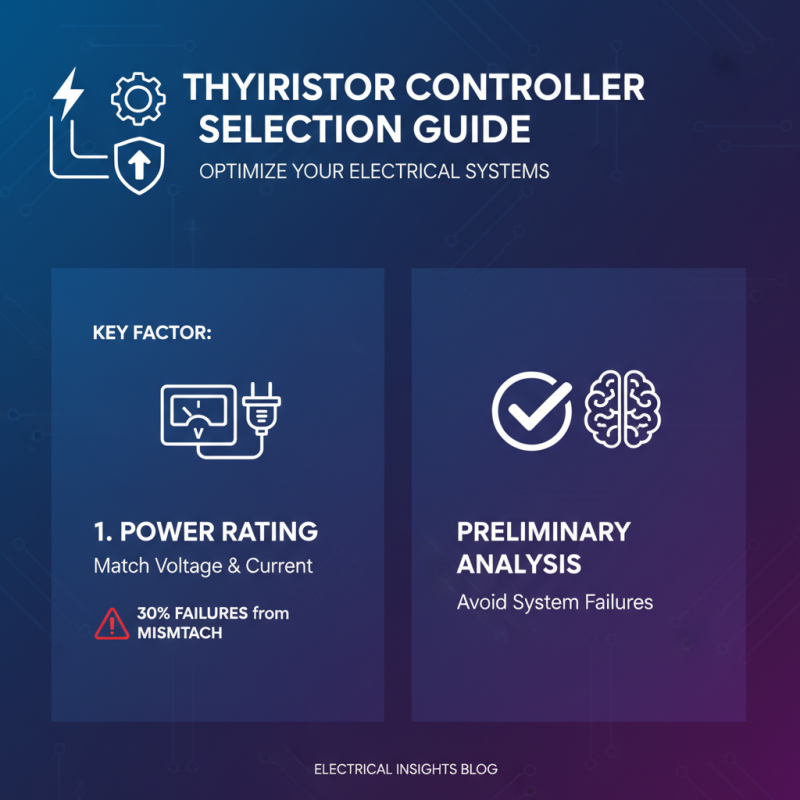
Selecting the right thyristor controller for your electrical applications requires careful consideration of several key factors. First, you need to assess the power rating. Controllers must match the application's voltage and current requirements. A mismatch can lead to performance issues. According to a recent industry report, over 30% of system failures stem from incorrect power ratings. This is often avoidable with adequate preliminary analysis.
Next, thermal management is crucial. Thyristors generate heat during operation. If not managed well, components can fail unexpectedly. A controller's thermal design should include adequate cooling mechanisms. Reports indicate that proper heat dissipation can extend the lifespan of components by up to 50%. Inadequate cooling strategies can lead to costly downtimes.
Lastly, consider the control features. A basic controller may not suffice for complex applications. Features such as phase control or pulse width modulation (PWM) can greatly enhance performance. According to market data, applications utilizing advanced control methods improved efficiency by 20%. However, complexity can introduce challenges. Ensure that your team has the expertise to implement these features effectively.
Comparing Different Types of Thyristor Controllers
When selecting a thyristor controller, it's crucial to compare the different types available. Each type has unique features suited for various electrical applications. For instance, phase control thyristors are ideal for resistive loads. They offer smooth control over power delivery. On the other hand, integral cycle controllers excel in applications like induction heating. They operate by interrupting power in cycles, improving energy efficiency.
Another common type is the burst fire controller. With this design, multiple smaller bursts of power are delivered. This method can reduce the thermal stress on devices. However, it may not be suitable for all applications. It's essential to assess whether the application requires precise control or can tolerate some fluctuations.
Remember that the choice of a thyristor controller greatly impacts performance. Not every controller will meet the needs of every project. Some users may find themselves dealing with compatibility issues. These factors can lead to inefficiencies and additional costs in the long run. Therefore, careful consideration of your specific requirements is vital when making a decision.
Comparison of Different Types of Thyristor Controllers
This chart illustrates the performance characteristics of various types of thyristor controllers used in electrical applications.
Evaluating Performance and Efficiency of Thyristor Controllers
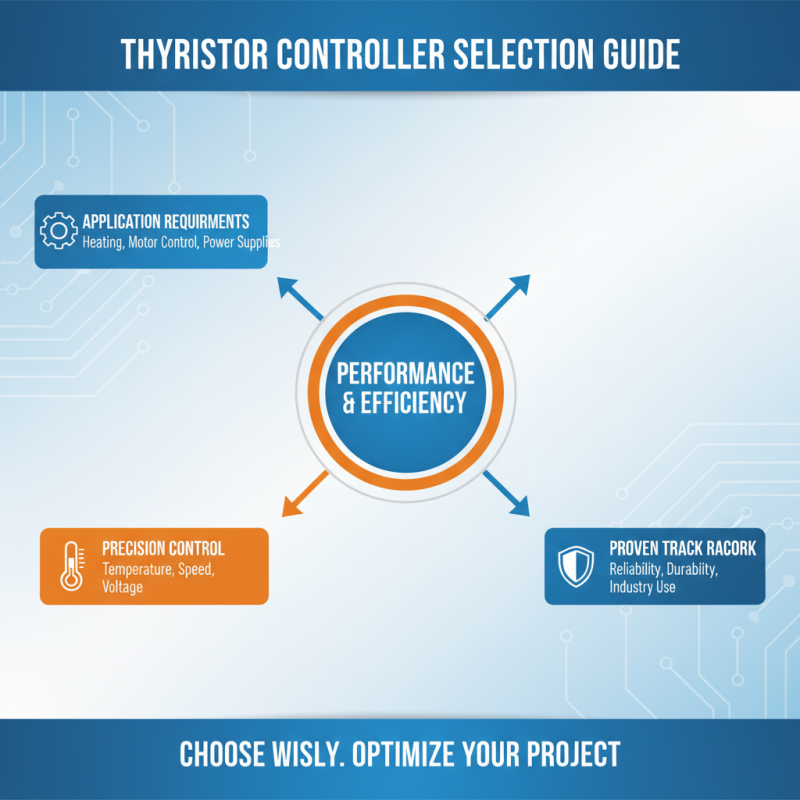
When selecting a thyristor controller, evaluating performance and efficiency is crucial. Understand the application requirements clearly. Different projects may have varying needs, affecting how a controller should function. For example, in heating applications, precise temperature control can be vital. Look for controllers that have a proven track record in similar settings.
Efficiency is another key factor. A highly efficient thyristor controller minimizes energy losses. This can result in significant cost savings over time. Pay attention to the operating range of the controller. Some may perform well at specific loads but falter at others. It's essential to check how the controller handles variations in input voltage. This aspect often gets overlooked in initial assessments.
Moreover, consider the thermal management of the controller. Excessive heat can lead to performance issues and reduced lifespan. Inefficient cooling solutions might not be adequate for high-demand situations. Assess user reviews and feedback on thermal performance. They often reveal insights about the controller's real-world efficiency. A balance between cost and performance might reveal areas for improvement.
Installation and Maintenance Tips for Thyristor Controllers
When installing a thyristor controller, precision is crucial. Begin by ensuring that the mounting surface is clean and free of debris. A stable base prevents issues like vibration, which can damage components over time. In a recent report, it was noted that improper installations accounted for approximately 28% of equipment failures. This statistic highlights the importance of proper setup.
Wiring is another critical step. Use appropriately rated cables to handle the expected load. Many failures stem from inadequate wire sizing, leading to overheating. A study revealed that 35% of failures in electrical applications were related to poor wiring practices. Regular checks on connections should be part of your maintenance routine. Look for any signs of corrosion or wear.
Routine maintenance can also prolong the lifespan of your controllers. Cleaning dust and checking for loose connections are essential tasks. Some experts recommend inspecting controllers every six months. However, this often gets overlooked, leading to preventable breakdowns. Users must reflect on their maintenance habits. A proactive approach can save costs down the line.